


THE ARMADILLOS AND HONEY PROJECT

Coexistence between beekeepers and giant armadillos: a challenge that ensures sustainability for all.

Previous slide
Next slide

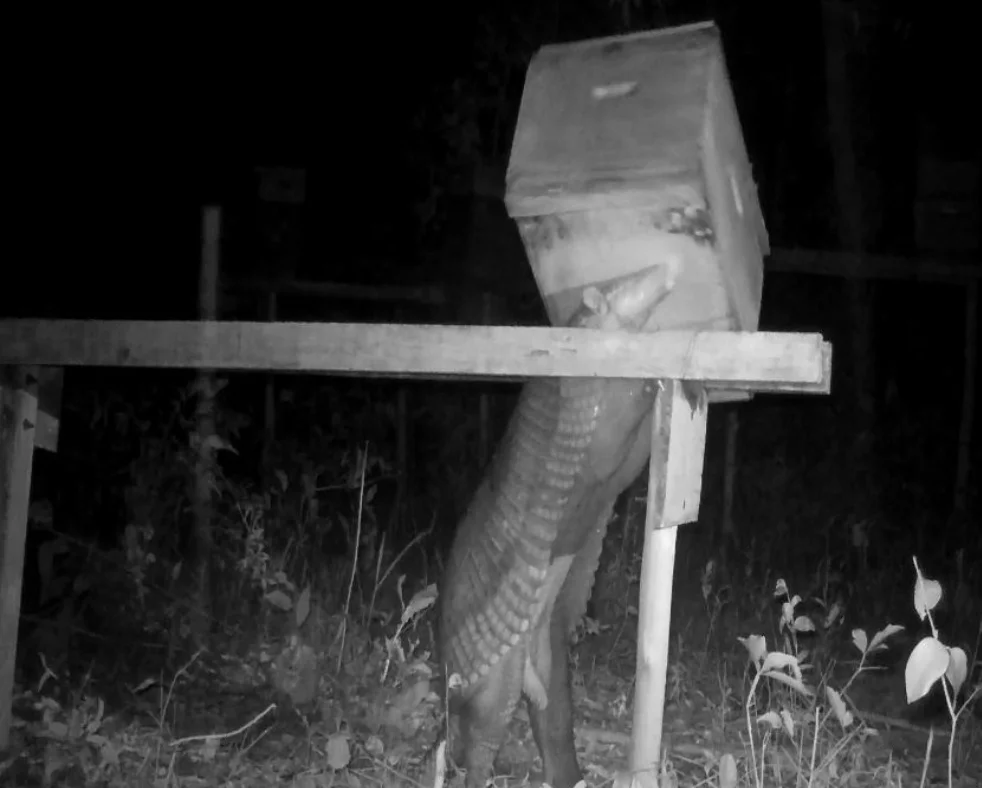
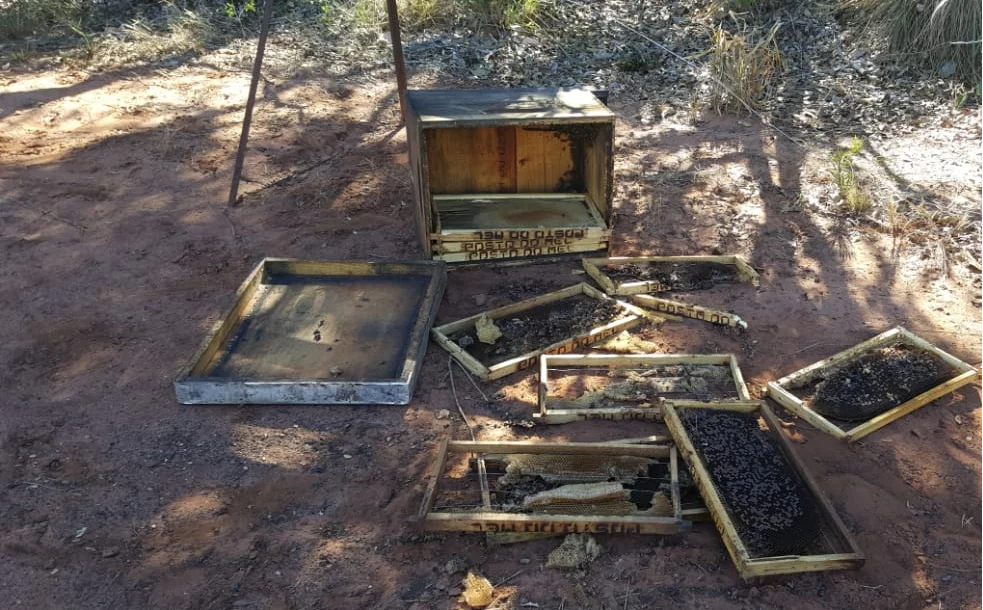
The Armadillos and Honey Project began in 2015, initially as a complement to research mapping the occurrence of the giant armadillo in the Cerrado region of Mato Grosso do Sul. During fieldwork, wildlife specialists interacted with over a thousand rural producers to gain access to private lands. In the process, they identified an unexpected conflict: giant armadillos, an endangered species, had begun knocking down hives in search of bee larvae.

The giant armadillo feeds most frequently on termites and ants, but may resort to bee larvae when readily available, especially when their natural food supply is scarce in Cerrado fragments. A problem arises then because beekeepers install their hives precisely in areas of native vegetation, which are also essential habitat for giant armadillos. With the advance of deforestation and the reduction of the natural food supply, the giant armadillo has been resorting to beehives, causing significant losses in the production of honey and honey-derived products.

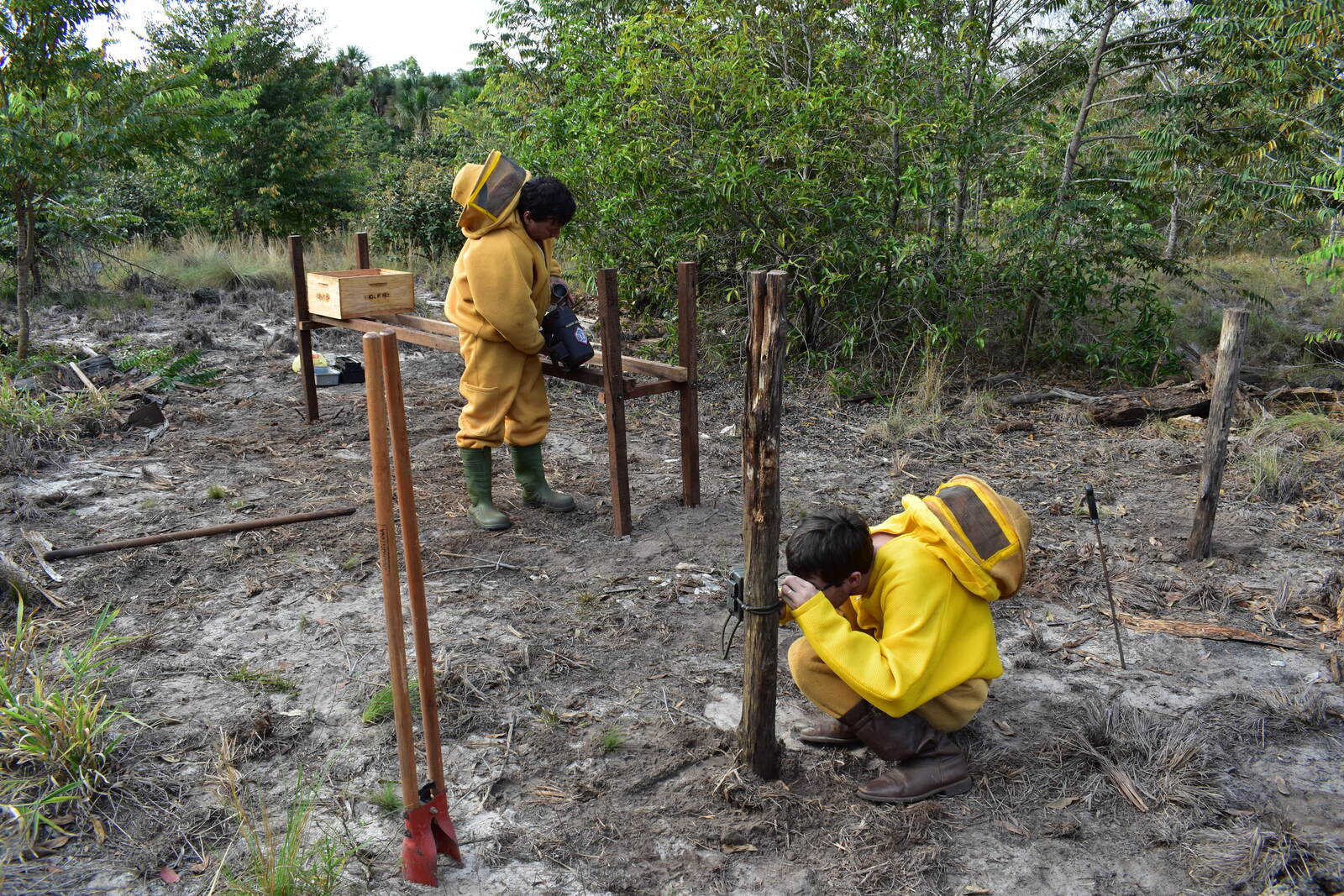
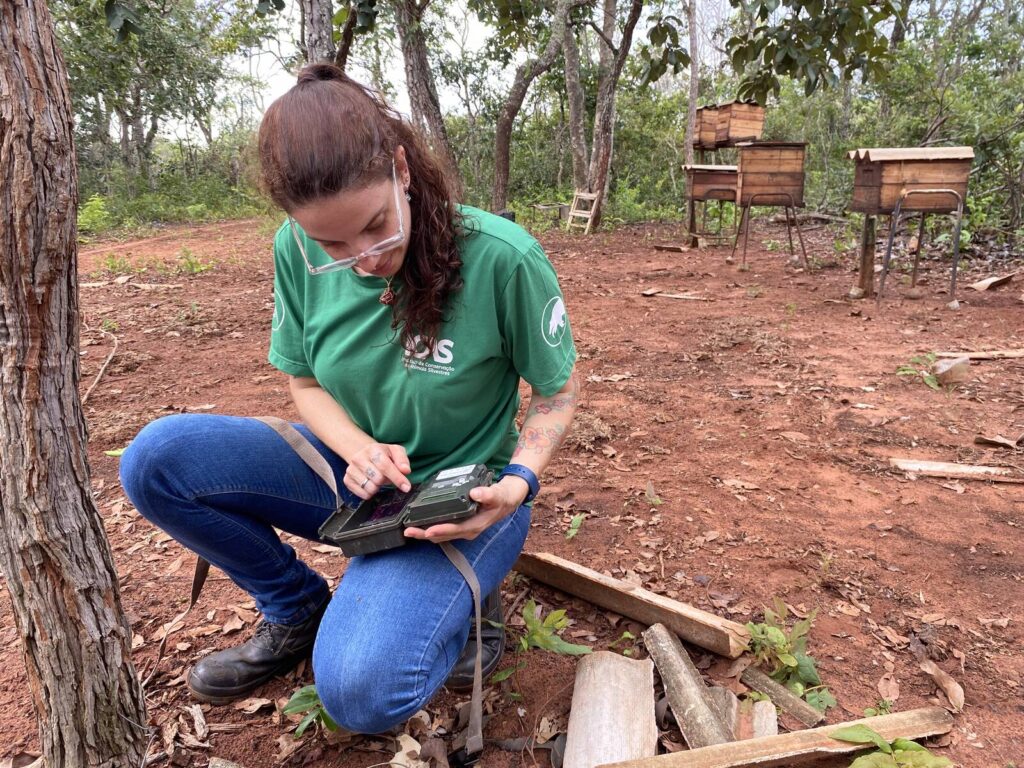
In the survey conducted within the project, 178 apiaries were mapped in collaboration with 10 beekeeping associations. The study revealed that 73% of these sites had suffered damage caused by giant armadillos in the five years prior to the survey, with 46% in the last year alone. To better understand the conflict, researchers installed motion-activated cameras in some of the apiaries, recording the behavior of giant armadillos and other wildlife approaching the destroyed beehives.

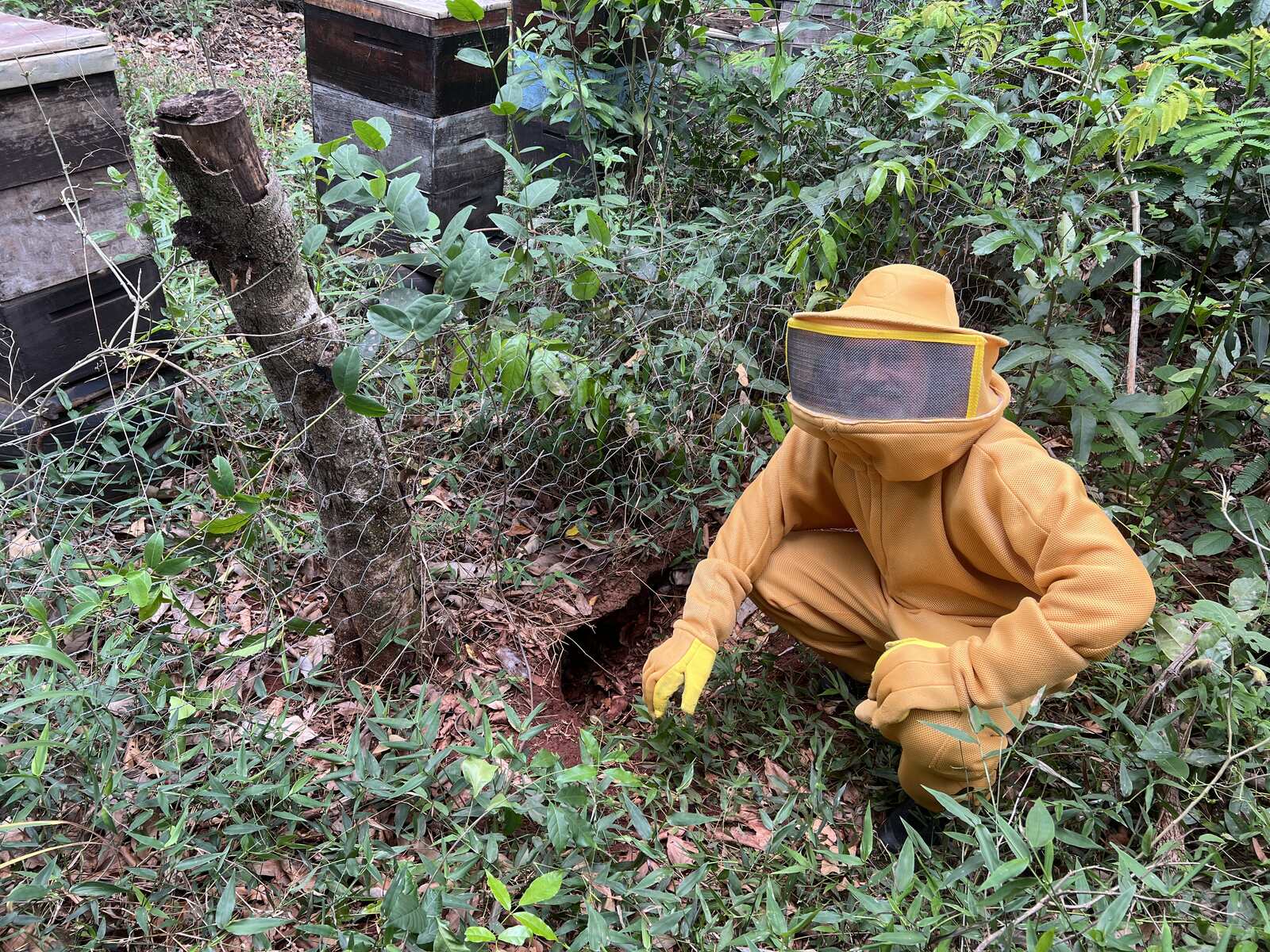
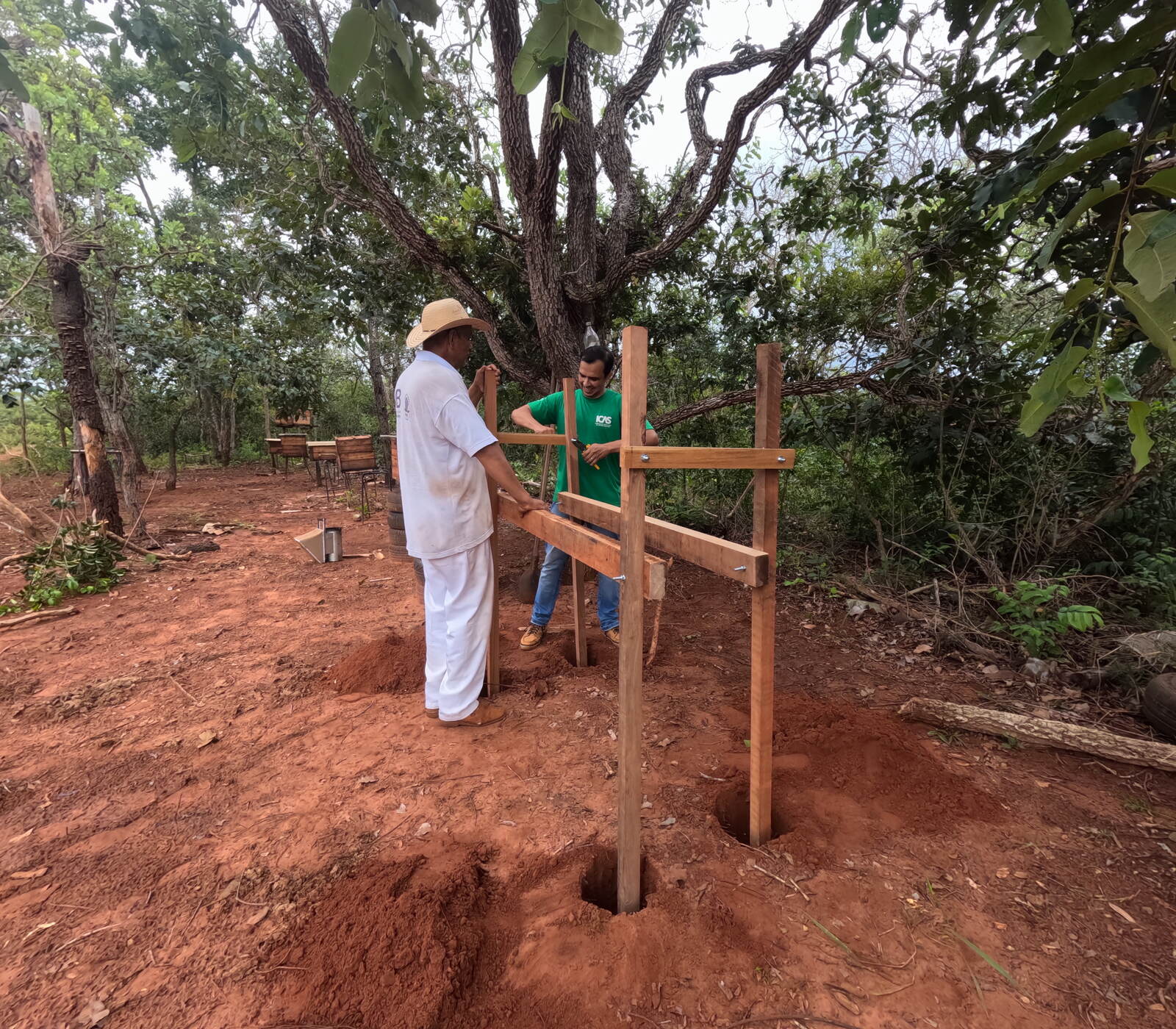
To promote peaceful coexistence between beekeepers and the giant armadillo, the Guia de Convivência entre Apicultores e Tatus-Canastra no Cerrado do Mato Grosso do Sul (or “Guide to Coexistence between Beekeepers and Giant Armadillos in the Cerrado of Mato Grosso do Sul” in English) was developed. It gathers information on the behavior of the species and presents effective strategies to protect apiaries without harming local wildlife. Among the proposed solutions are the installation of fences around apiaries or the use of tall, sturdy stands to keep beehives out of reach of the giant armadillo. All measures were tested and evaluated for effectiveness, cost, and ease of installation.

In addition to testing and evaluating mitigation measures already used by beekeepers, and in turn, selecting those most effective and appropriate to the needs of each apiary for the guide, the Armadillos and Honey Project also developed benefits to recognize and support beekeepers committed to wildlife conservation. Two important benefits are the “Amigo do Tatu-Canastra” (“Giant Armadillo-Friendly”) Seal and the Rainhas (“Queens”) Program. Furthermore, the project has been promoting activities and workshops aimed at stimulating the creative economy and socioeconomic development of the communities where it operates, with the goal of fostering economic independence not only for certified beekeepers but also for all partners in giant armadillo conservation.

Currently, the project has approximately 100 certified beekeepers and has expanded its operations to four Brazilian states: Mato Grosso do Sul, Minas Gerais, Goiás, and Pará. The initiative works not only with micro- and small-scale producers, but also with associations, cooperatives, and Indigenous communities, strengthening sustainable beekeeping and the conservation of the giant armadillo in different realities and territories.

The Armadillos and Honey Project demonstrates that, with knowledge and proper management, it is possible to ensure the sustainability of beekeeping while preserving one of the most fascinating species of Brazilian fauna. By choosing products certified by the project, you encourage responsible and more sustainable practices and help protect our biodiversity giant.

“Giant Armadillo-Friendly” Seal

The Amigo do Tatu-Canastra, or Giant Armadillo-Friendly, seal was created to recognize beekeepers who adopt sustainable management practices that protect both their beehives and the giant armadillo. In partnership with producers, various techniques were developed to reduce attacks on apiaries without harming local wildlife.

Products (both honey and honey-derived) from these beekeepers receive the seal certification, identifying that production is carried out in accordance with environmental preservation. This distinction has generated positive impacts: sales of certified products have increased by approximately 20%, and the added value of honey has increased by 15%. In addition to promoting biodiversity, the seal encourages more sustainable practices in the beekeeping sector and offers consumers the opportunity to actively contribute to giant armadillo conservation by choosing certified products.

VOZES DO MEL

Uma série com histórias de harmonia entre homem, abelhas e tatus.

PUBLICAÇÕES

GUIA DE PRÁTICAS PARA MANEJO

Elaboramos um material com alguns métodos de proteção e boas práticas de manejo para auxiliar apicultores

CANASTRAS E COLMEIAS

Guia de convivência entre apicultores e tatus-canastra no Cerrado de Mato Grosso do Sul

Queens Program

The Rainhas, or Queens, Program was developed to support beekeepers who suffered substantial losses from giant armadillo attacks. Many producers ended up losing a significant portion of their beehives. With this in mind, the project decided to directly assist in production recovery.

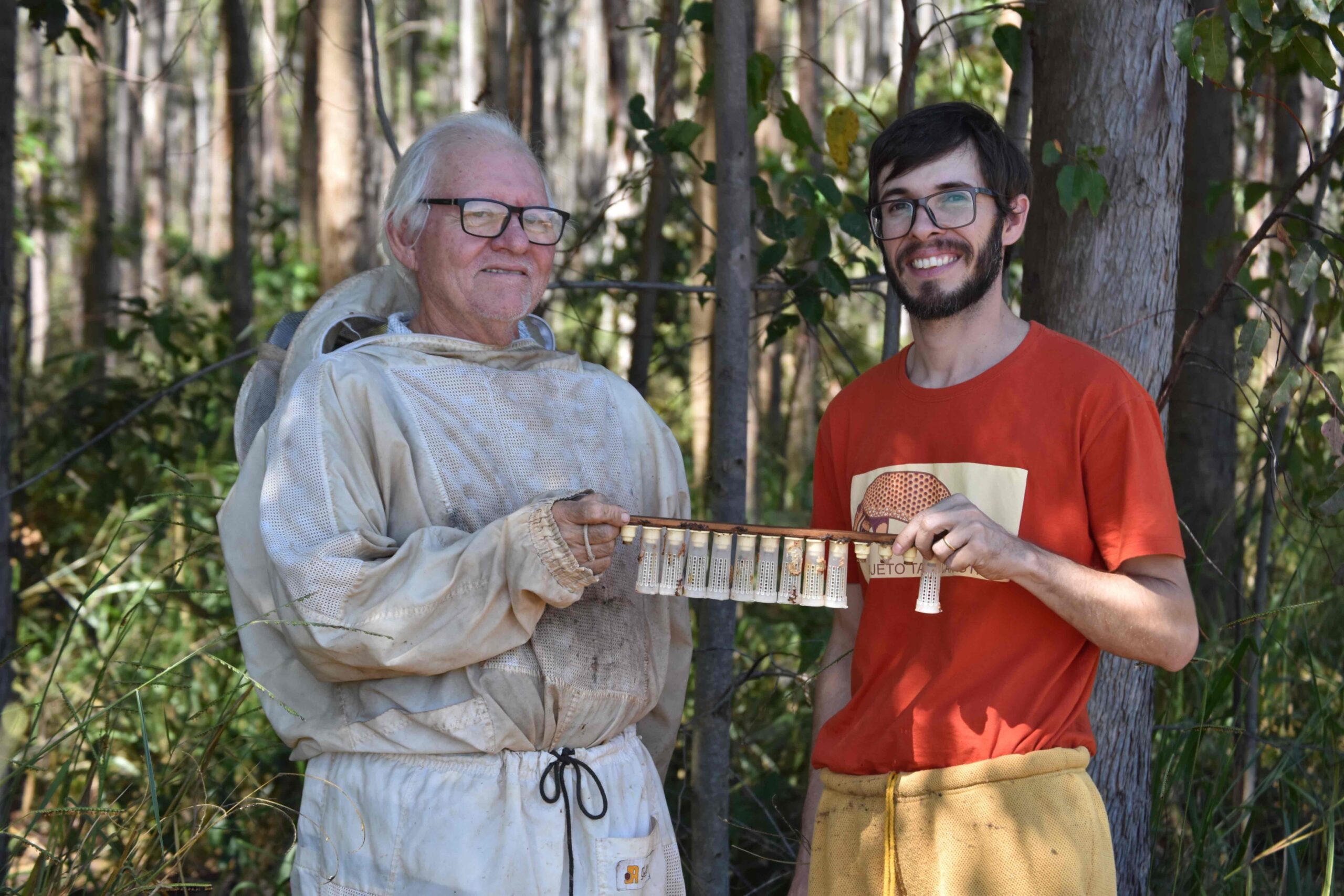
The initiative provides high-quality queen bees from a selected lineage to partner beekeepers, enabling the restoration of affected swarms and ensuring a return to productivity in their apiaries. This initiative is especially important for small-scale producers, who often lack formal health certification but are still economically impacted by giant armadillo attacks.

Among the project’s goals is the distribution of hundreds of queen bees in the coming months, benefiting dozens of beekeepers and demonstrating that it is possible to balance the protection of biodiversity with the sustainable development of beekeeping in the Cerrado.

VIDEOS

The giant armadillo (Priodontes maximus) is found only in South America, inhabiting the Pantanal, Amazon, and Cerrado biomes, as well as remnants of the Atlantic Forest in Brazil. Measuring up to 1.5 meters in length and weighing as much as 50 kilograms, it is rarely seen due to its naturally low population density.

Females have a five-month gestation period, giving birth to a single offspring every three to four years. With their powerful claws, giant armadillos can dig burrows up to five meters deep. Once abandoned, these burrows provide shelter for more than 70 other species, earning the giant armadillo the title of an “ecosystem engineer.”

Despite its crucial ecological role, the species is threatened with extinction, primarily due to the loss and fragmentation of its natural habitat.

Examples of hive attack mitigation in other countries

EQUIPE

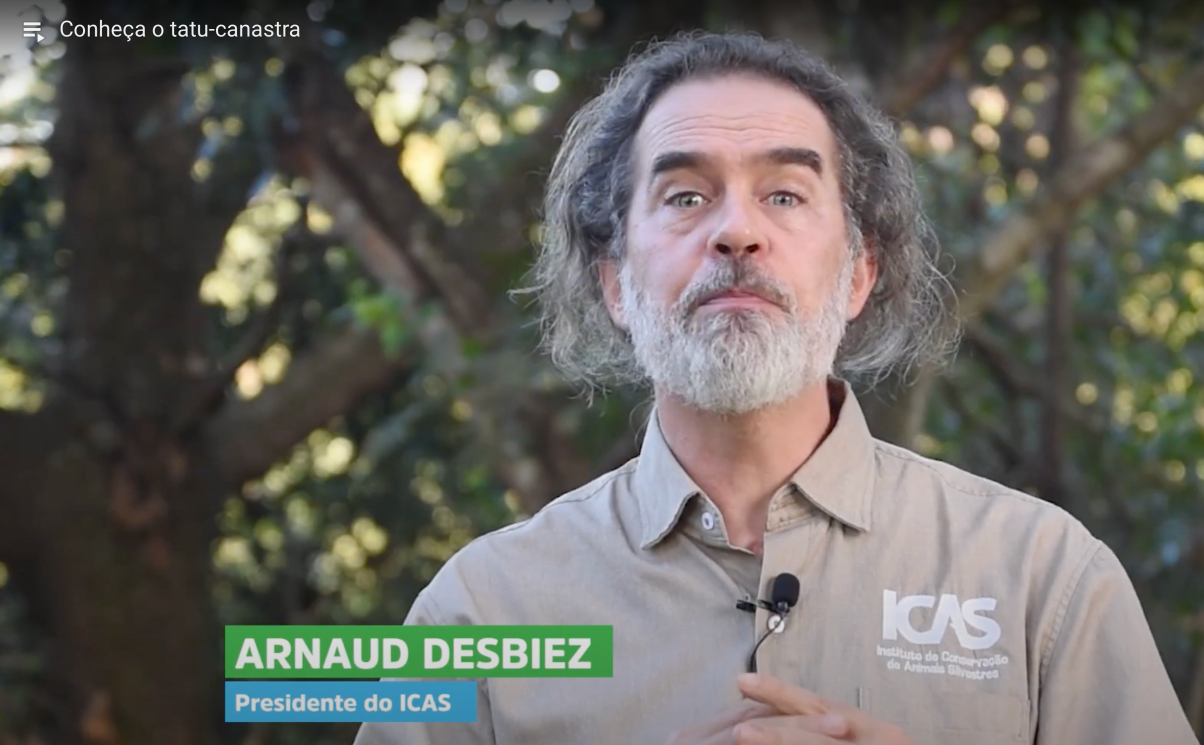
Arnaud Desbiez

Zoólogo

Atua nas áreas de Biologia da Conservação, pesquisa e ecologia de espécies e uso de recursos naturais. Trabalhou e morou em Belize, Argentina, Bolívia…

Saiba mais>>

Danilo Kluyber

Médico veterinário

Médico Veterinário graduado pela Universidade Paulista (2003), possui experiência em Medicina de Animais Selvagens, Medicina da Conservação e…

Saiba mais>>

Gabriel Massocato

Biólogo

Graduado pela Universidade Federal da Grande Dourado (2009). Realizou estágios curriculares e extra-curriculares em projetos de conservação com experiência em captura…

Saiba mais>>

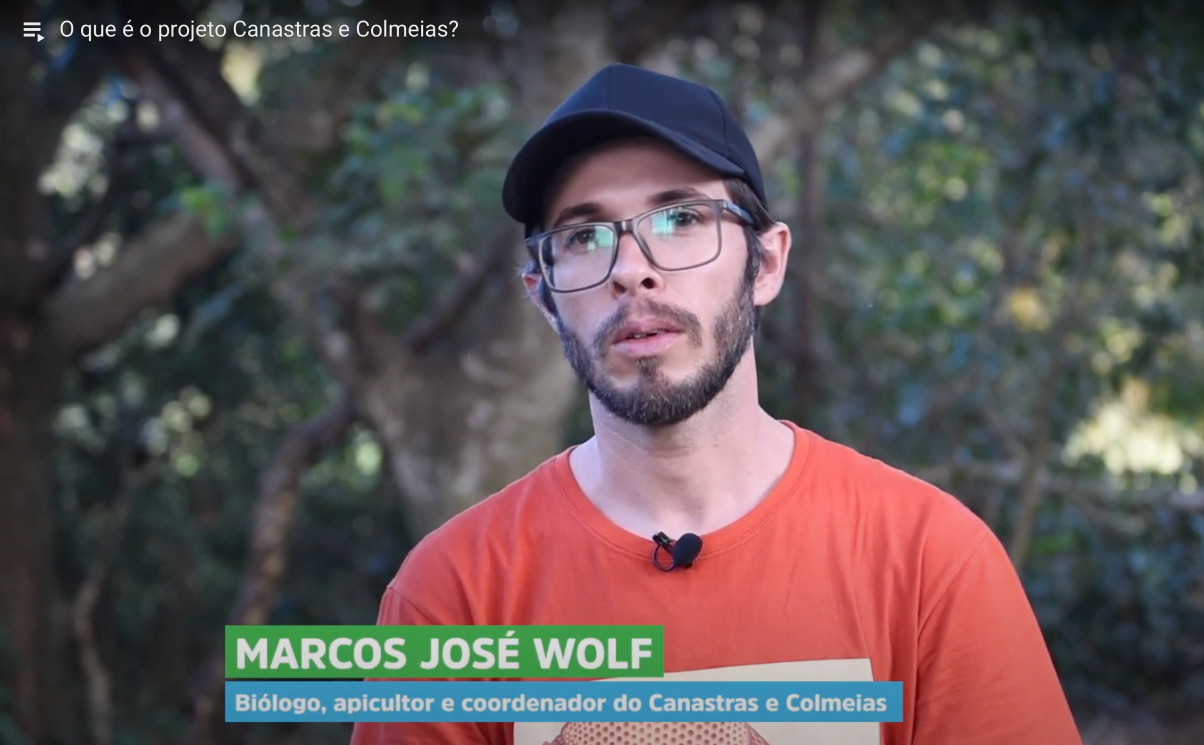
Marcos José Wolf 

Biólogo

Graduado em Ciências Biológicas pela Universidade Estadual de Mato Grosso do Sul, Mestre em Biologia Animal pela UFMS e especialista em apicultura…

Saiba mais>>

Ronald Rosa

Médico veterinário

Médico Veterinário especializado em animais silvestres formado pela USP em 1985. A Educação Ambiental foi uma das principais áreas de trabalho dentro dos projetos de conservação onde atuou…

Saiba mais>>

Audrey Brisseau

Economista

Graduada em Ciências Econômicas pela Universidade Paris X e em Marketing & Gestão pelo Programa de MBA da Reims Business School, atuou como Coordenadora de Projetos & Comunicação durante…

Saiba mais>>

Guto Akasaki

Jornalista

Graduado em comunicação Social com habilitação em Jornalismo, atua como assessor de imprensa do terceiro setor desde 2010. Apaixonado por fotografia e criação de conteúdo, chegou para somar com a equipe…

Saiba mais>>

APICULTORES PARCEIROS

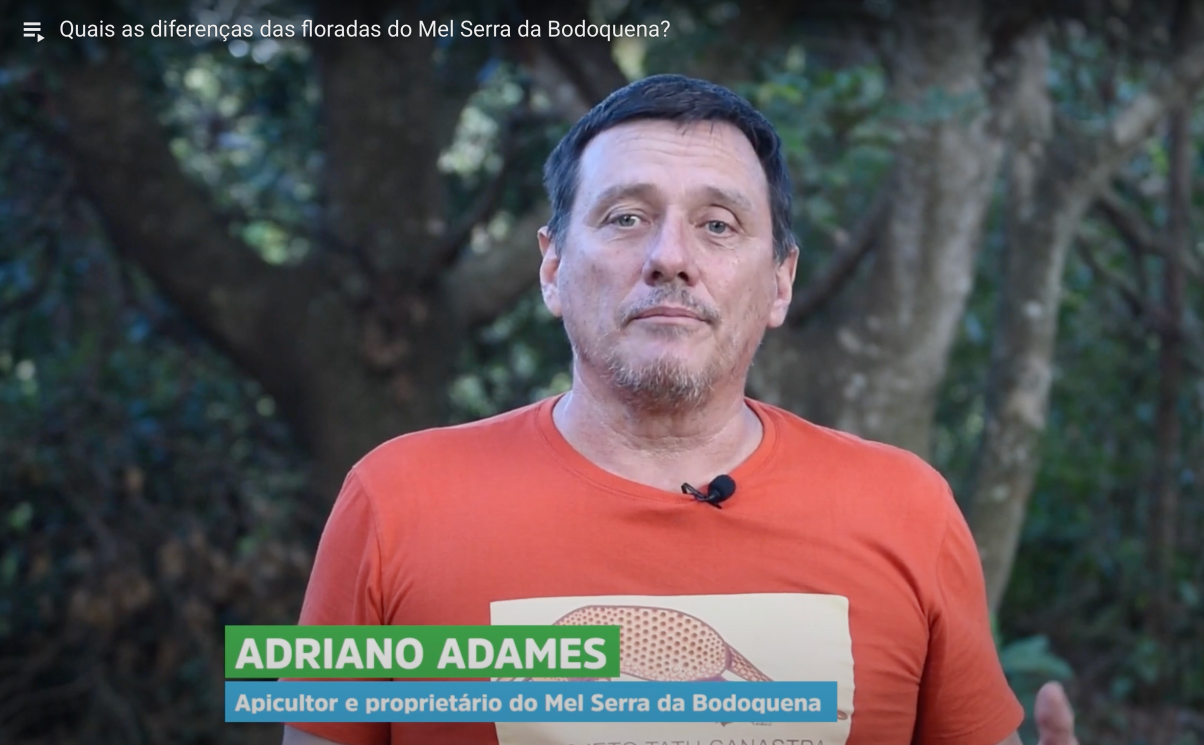
Adriano
Adames

Apicultor no município de Campo Grande (centro de MS). Colaborou nos testes de materiais e métodos de proteção aos Canastras e Colmeias.

Davi
Borges

Apicultor em Bataguassu (leste de MS). Colaborou nos testes de materiais e métodos de proteção aos Canastras e Colmeias.

Elizeu Lima
de Araújo

Apicultor em Três Lagoas (leste-nordeste de MS). Colaborou nos testes de materiais e métodos de proteção aos Canastras e Colmeias.

Vania Maria B. Furtado

Apicultora em Bataguassu (leste de MS). Colaborou nos testes de materiais e métodos de proteção aos Canastras e Colmeias.

Realização

Financiadores

Colaboradores

NOTÍCIAS RELACIONADAS

CONTACT US

Want to learn more about our work or have a question? Get in touch with us — we’ll get back to you as soon as possible.